
Compression Boots Sydney Recovery: What Actually Works (And What Doesn't)
- Lukas Vojnar
- Jun 22
- 5 min read

Recovery has become its own industry. Compression boots. Red light panels. Cold plunge tubs. Ice baths. Infrared saunas. Every gym and wellness studio in Sydney seems to be offering another piece of equipment that promises to speed up how fast you bounce back from training.
The honest answer is: some of this works, some of it works a little, and some of it is mostly placebo with a great marketing budget.
At Bondi Sports Massage, we have NormaTec-style compression boots and red light therapy on site, and we integrate them with hands-on treatment. Here's what the evidence actually says about these tools, and how they fit into a smart recovery plan.
Why Recovery Matters More Than You Think
Most people think of recovery as the absence of training, a day off, some sleep, maybe a stretch. But recovery is actually when adaptation happens. Training creates the stimulus; recovery creates the adaptation.
If your recovery is poor, you blunt the benefit of the training you're already doing. You accumulate fatigue faster than you can clear it, performance drops, injury risk rises, and motivation tanks.
Sydney's Eastern Suburbs has no shortage of people who train hard — CrossFit boxes in Bondi Junction and Paddington, running groups on the coastal track, surf training, powerlifters at Randwick and Coogee. Most of them are great at the training side. The recovery side is where the gap usually is.
Compression Boots: What They Do and When They're Worth It
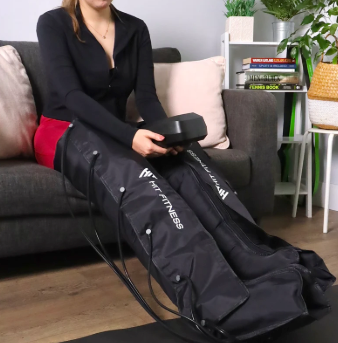
Compression boots (like NormaTec) use pneumatic compression — air pressure that moves sequentially from the foot up the leg, mimicking the pumping action of the lymphatic system.
What the evidence shows:
- Compression therapy meaningfully reduces delayed onset muscle soreness (DOMS) and perceived fatigue after heavy training
- It accelerates clearance of metabolic waste products from muscle tissue
- It's particularly effective at reducing swelling and heaviness in the legs after long endurance efforts - running, cycling, intense leg sessions
- The effect on actual performance recovery is moderate but consistent
When it's most useful:
- After long runs (half marathon prep, long weekend efforts along the coastal track)
- Following heavy leg sessions - squats, deadlifts, lunges
- The day after a hard event or competition
- When you have to train again within 24-48 hours and can't afford significant fatigue carry-over
When it's less critical:
- Light training days
- When you have 48-72 hours before your next session (standard recovery mechanisms are sufficient)
At BSM, we use compression boots as part of longer recovery sessions, typically in combination with soft tissue work, so the massage addresses the tissue quality issues that compression alone doesn't touch.
Red Light Therapy: Separating Signal from Noise
Red light therapy (also called photobiomodulation or low-level laser therapy) uses specific wavelengths of red and near-infrared light to penetrate tissue. It's been studied for wound healing, inflammation reduction, muscle recovery, and pain management.
What the evidence shows:
- Moderate evidence for reducing muscle fatigue and soreness when applied before or after training
- Reasonably good evidence for accelerating soft tissue repair, particularly in tendons and ligaments
- Some evidence for reducing inflammation and improving mitochondrial function in muscle cells
- The effect size is real but modest, it's not a magic button
Where red light therapy makes most sense:
- Chronic soft tissue injuries that are slow to resolve (tendinopathy, scar tissue)
- Supporting recovery from high-volume training blocks
- As an adjunct to hands-on treatment for stubborn pain and inflammation
- Post-exercise recovery when combined with other modalities
At Bondi Sports Massage, red light therapy is available as a standalone session or as an add-on to a massage appointment. For injury presentations, we find it's most useful paired with soft tissue work and a loading program — not used in isolation.
Sports and Remedial Massage: Still the Foundation
Here's the thing that often gets lost in conversations about recovery tools: none of these modalities replace quality hands-on treatment.
Compression boots reduce fluid and swelling. Red light therapy supports cellular repair. But neither one addresses the trigger points, myofascial restrictions, movement compensations, and tissue quality problems that accumulate from consistent training and daily life.
What massage does that recovery tech don't:
- Identifies where tension is being held and why
- Directly treats trigger points in overworked muscles
- Addresses compensatory patterns that build up over weeks and months
- Provides clinical assessment - so you know what's an early warning sign and what's just normal soreness
- Works on the nervous system as well as the tissue - reducing protective muscle guarding and pain sensitivity
At BSM, a typical recovery session for a regular gym-goer or runner in Bondi might include:
- 60 minutes of sports/remedial massage targeting the primary areas of restriction and fatigue
- Myofascial cupping over the thoracolumbar region or posterior chain where needed
- 20–30 minutes of compression boots post-massage
- Red light therapy on any areas with active irritation or chronic tightness
The combination is more than the sum of its parts.
Myofascial Cupping in Recovery
Cupping deserves its own mention in a recovery context. It's not just for Instagram aesthetics.
Mobilising cupping, where the cups are moved across tissue rather than left in place, creates a decompressive effect that relieves tension in the thoracolumbar fascia, glutes, and posterior chain very effectively after heavy training. Many athletes report that cupping sessions the day after a hard effort significantly reduce the duration and intensity of DOMS.
The mechanism is partly mechanical (fascial decompression, improved fluid dynamics) and partly neurological (pain gate modulation, reduced sympathetic activity). The marks left by cupping are not bruising in the traditional sense — they're a localised response from superficial blood vessels and fade within a few days.
Building a Recovery Routine That Actually Works
Recovery doesn't need to be complicated. Here's a practical framework:
Every session:
- Adequate sleep (7–9 hours - this is non-negotiable and outperforms every recovery tool available)
- Protein intake around training (1.6–2.2g per kg of bodyweight across the day)
- Movement - don't be completely sedentary on recovery days
Weekly:
- 1–2 dedicated recovery or active rest days
- A lower intensity session or walk, swim, or mobility work
Monthly or as needed:
- Sports or remedial massage (most active people benefit from fortnightly sessions)
- Compression boot sessions after heavy training blocks or events
- Cupping when tissue quality starts to feel restricted
When symptomatic:
- Don't wait until you're injured -get in early
- Address the warning signs (persistent tightness, localised fatigue, reduced range of motion, early morning stiffness) before they become actual injuries
Recovery Sessions at Bondi Sports Massage
We're based in Bondi Junction and work with athletes, gym-goers, runners, and active people across Bondi Beach, Coogee, Randwick, Rose Bay, Paddington, and the Eastern Suburbs.
Our clinic is designed to be comfortable - not a clinical conveyor belt. You get proper time, proper attention, and a recovery plan that's actually built around what you're doing and where you want to go.
If you want to train harder and recover smarter, come in.
Call or text: +61 410 802 850
Book online: https://www.bondisportsmassage.com.au/book-online
Bondi Sports Massage | Sports + Remedial Massage • Dry Needling • Cupping | Bondi Junction, Sydney


Comments